Cultivating Trigona Honey Bees at P4S OMAH IJO
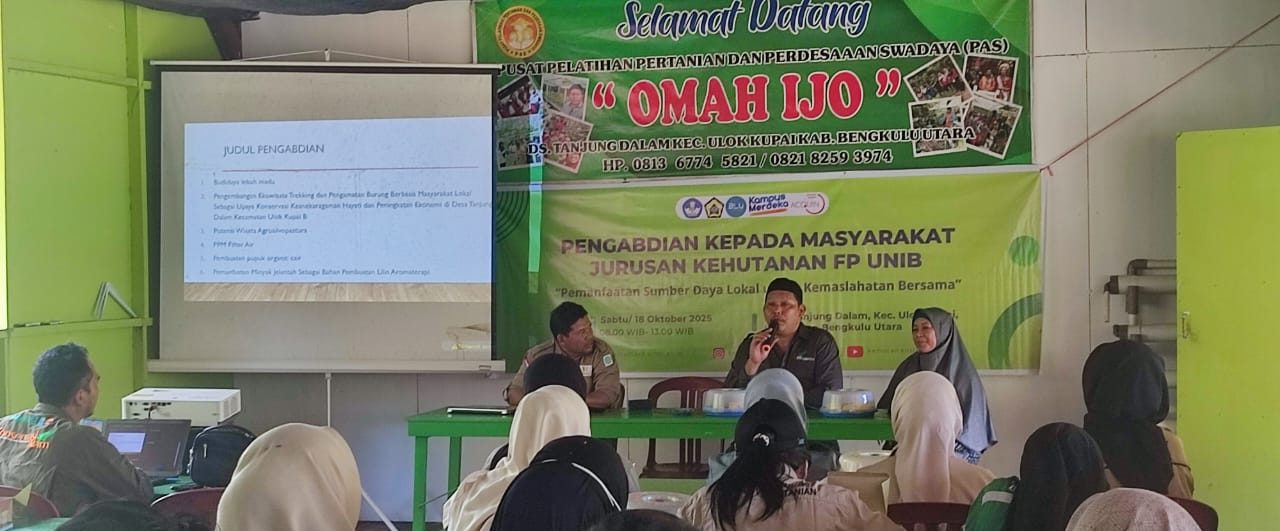
North Bengkulu, 18 October 2025. Lecturers of the Forestry Department (Forestry and Environmental Science Study Program), Faculty of Agriculture, Bengkulu University carried out Community Service activities with the theme “Increasing Community Capacity in Cultivating Trigona Honey Bees as a New Economic Source and Environmental Conservation Effort at the OMAH IJO Self-Help Agricultural and Rural Training Center (P4S), Tanjung Dalam Village, Ulok Kupai District, Regency North Bengkulu”. This activity aims to provide education and practical skills to the community in developing the cultivation of stingless bees (Trigona sp.) which are known to be easy to maintain, environmentally friendly and have high economic value through honey, propolis and bee pollen products.
Head of the service team, Dr. Gunggung Senoaji, S.Hut., M.P., explained that the introduction of Trigona bee cultivation technology is a strategic step in strengthening the economy of village communities while supporting the conservation of local ecosystems. “Trigona bees have great potential as a people’s business commodity. Apart from being easy to care for and harmless, these bees also play an important role in plant pollination. Through this activity, we want to help people learn about correct cultivation techniques and open up new environmentally friendly business opportunities,” said Dr. Gunggung Senoaji, S.Hut., M.P.
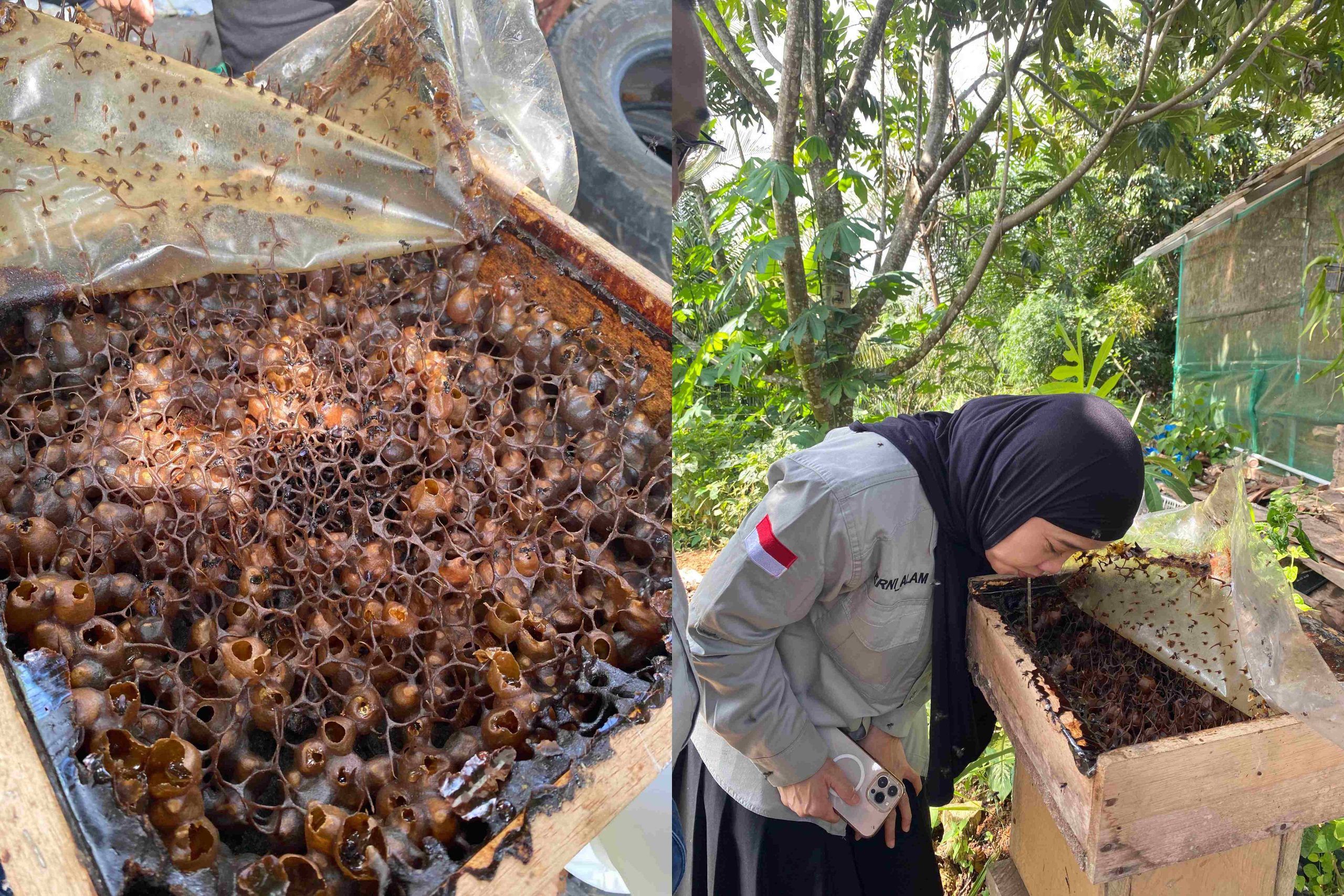
One of the participants said that this training provided new insight into the economic potential of cultivating stingless bees. “We just found out that Trigona bees don’t sting and are easy to keep. This is an interesting business opportunity for us, especially since the market already exists,” said one participant. Through this activity, Bengkulu University is committed to encouraging innovation in the forestry and agribusiness sectors that directly benefit the community, as well as strengthening the role of P4S OMAH IJO as a training and community empowerment center in North Bengkulu. This activity is expected to be the first step in the growth of independent businesses based on Trigona bee cultivation at the village level as an effort to increase income and preserve the environment.
