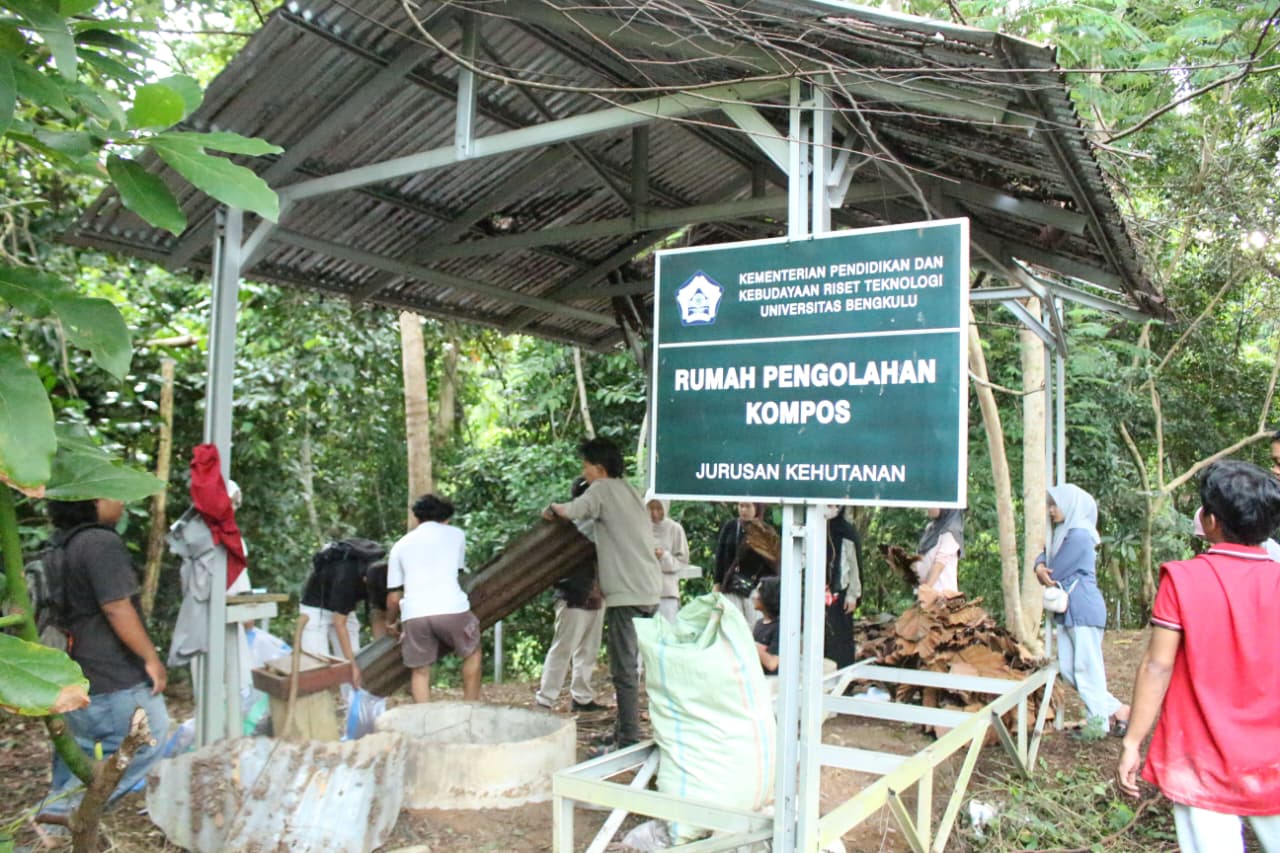
Campus Natural Cycle: Litter Recycling Movement to Create Fertile Soil at the University of Bengkulu
Bengkulu, November 21, 2025 — The Forestry Department of the University of Bengkulu initiated an environmental movement titled “Campus Natural Cycle: Litter Recycling Movement to Create Fertile Soil” as an effort to utilize the abundant dry leaf litter on campus. This activity involved young lecturers from the Forestry Department and students from the Forestry and Environmental Science Study Programs, who were actively involved in the collection, processing, and harvesting of the compost.
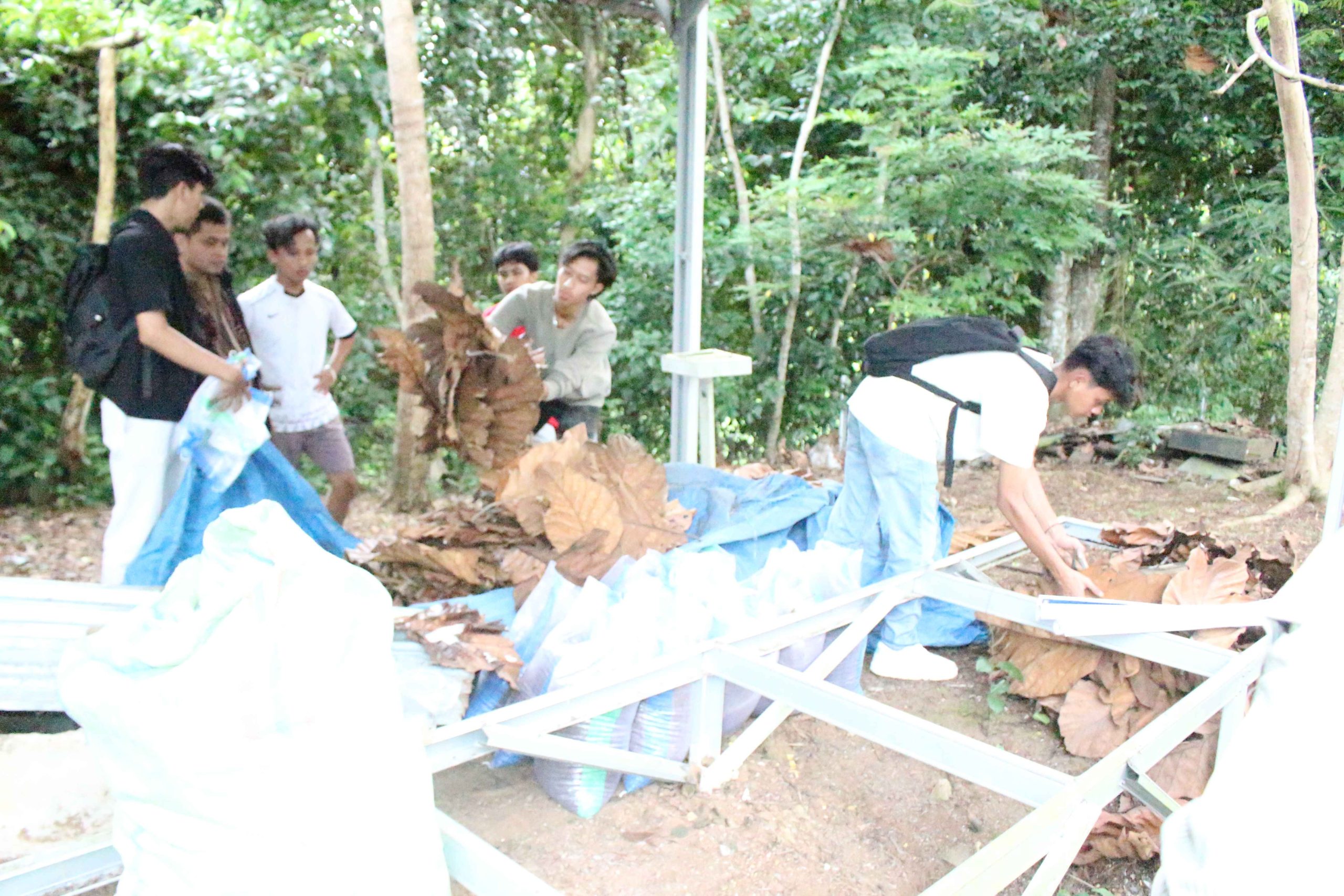
This movement arose from concern over the high volume of dry leaf litter produced by campus vegetation. Instead of being thrown away or burned, the litter was collected and used as raw material for compost through a natural decomposition process. This approach not only reduces the amount of organic waste but also creates a new nutrient source in the form of fertile compost soil that is safe for use in nurseries and reforestation activities.
During the process, students received hands-on learning about simple composting techniques, from sorting the litter, arranging the piles, watering, aerating, and monitoring the compost’s maturity level. Young lecturers from the Forestry Department provided guidance on the principles of soil ecology, the role of microorganisms in decomposition, and the benefits of using compost to improve soil structure. On the day of the event, participants collectively harvested mature compost from piles of leaf litter processed several weeks earlier. The resulting compost has a fine texture, is dark in color, and is rich in nutrients, making it ideal for use as a growing medium and organic fertilizer for seedlings in the campus nursery.
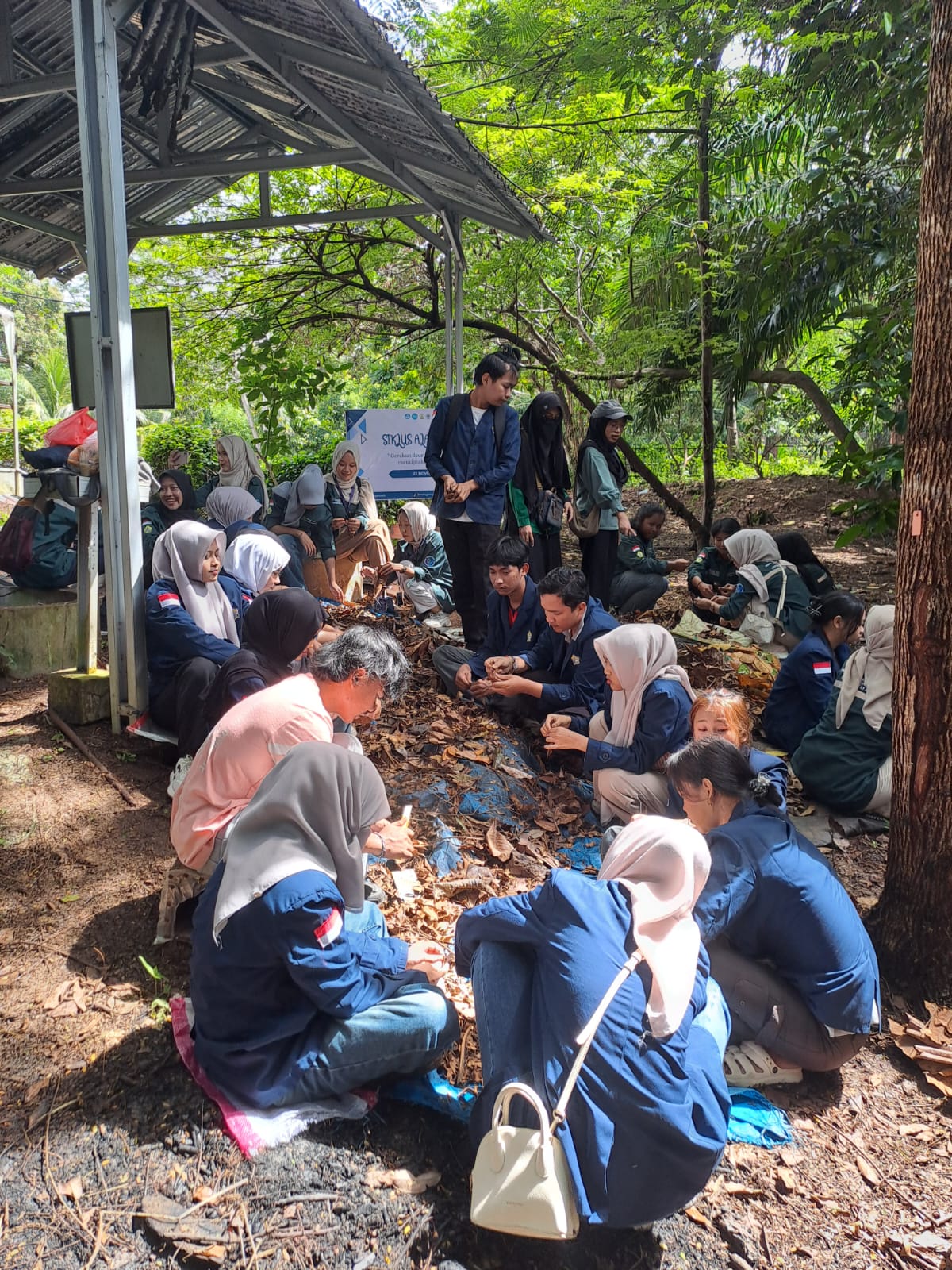
Through this initiative, the Forestry Department affirms its commitment to building a campus climate aligned with zero-waste principles and a sustainable lifestyle. Litter recycling not only provides ecological benefits but also strengthens students’ environmental literacy through practical exercises that illustrate how organic waste can be restored to the natural cycle. This program is expected to serve as a model for sustainable campus organic waste management, while also fostering a culture of environmental awareness among the University of Bengkulu academic community.
