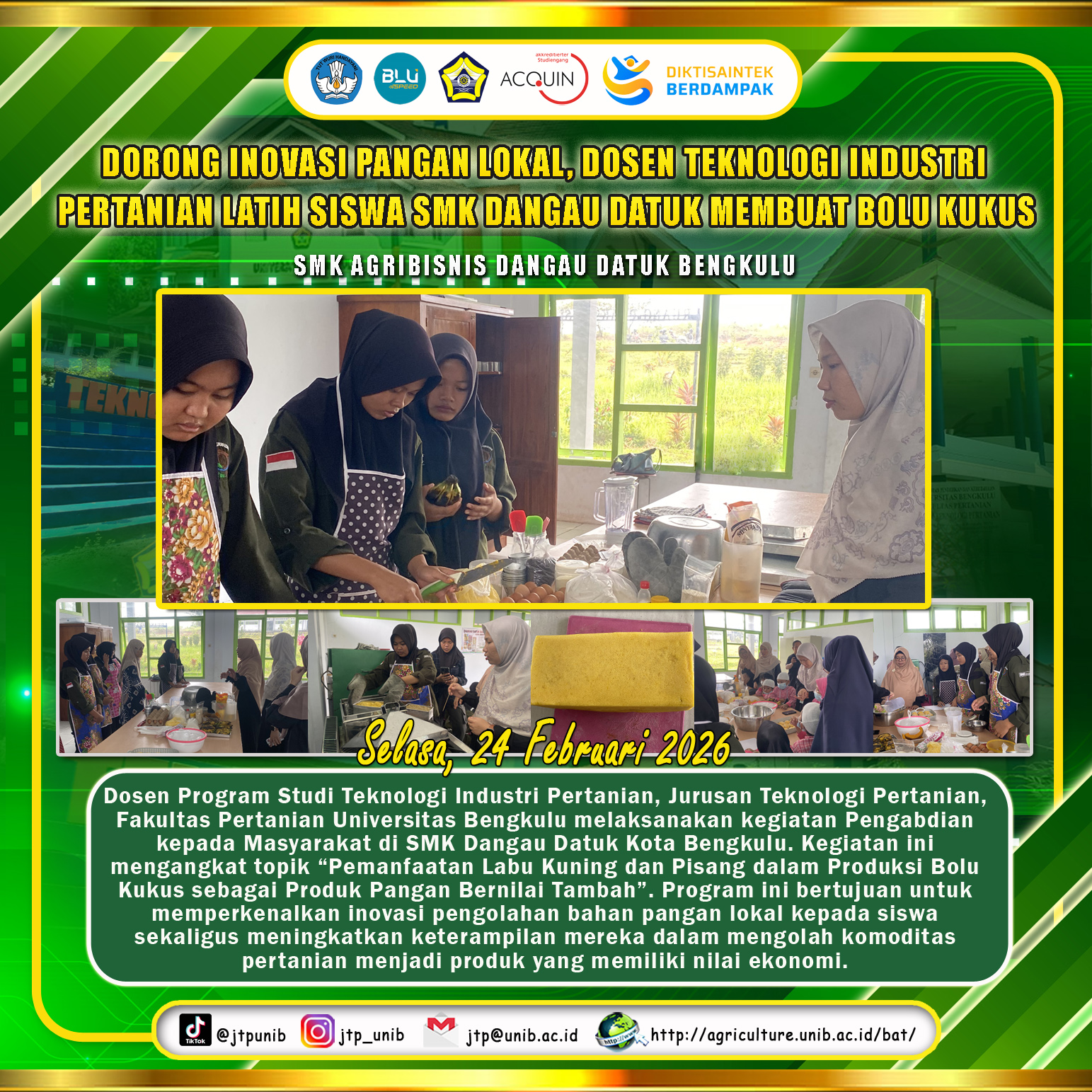
Encouraging Local Food Innovation, Agricultural Industry Technology Lecturer Trains Dangau Datuk Vocational School Students to Make Steamed Sponges
On Tuesday, February 24, 2026, lecturers of the Agricultural Industrial Technology Study Program, Department of Agricultural Technology, Faculty of Agriculture, University of Bengkulu carried out Community Service activities at SMK Dangau Datuk Kota Bengkulu. This activity raised the topic “The Utilization of Yellow Pumpkin and Bananas in the Production of Steamed Sponge as Value-Added Food Products”. This program aims to introduce local food processing innovations to students while improving their skills in processing agricultural commodities into products that have economic value.
This activity was carried out by a team of lecturers consisting of Selly Ratna Sari, S.Pi., M.Si., Dra. Devi Silsia, M.Si., and Dr. Yessy Rosalina, S.TP., M.Si. In this activity, the lecturers gave presentations on the potential of local food ingredients such as yellow pumpkin and bananas that are easy to find in the community. Both ingredients have good nutritional content and can be processed into various innovative food products, one of which is steamed sponge which is loved by various groups.
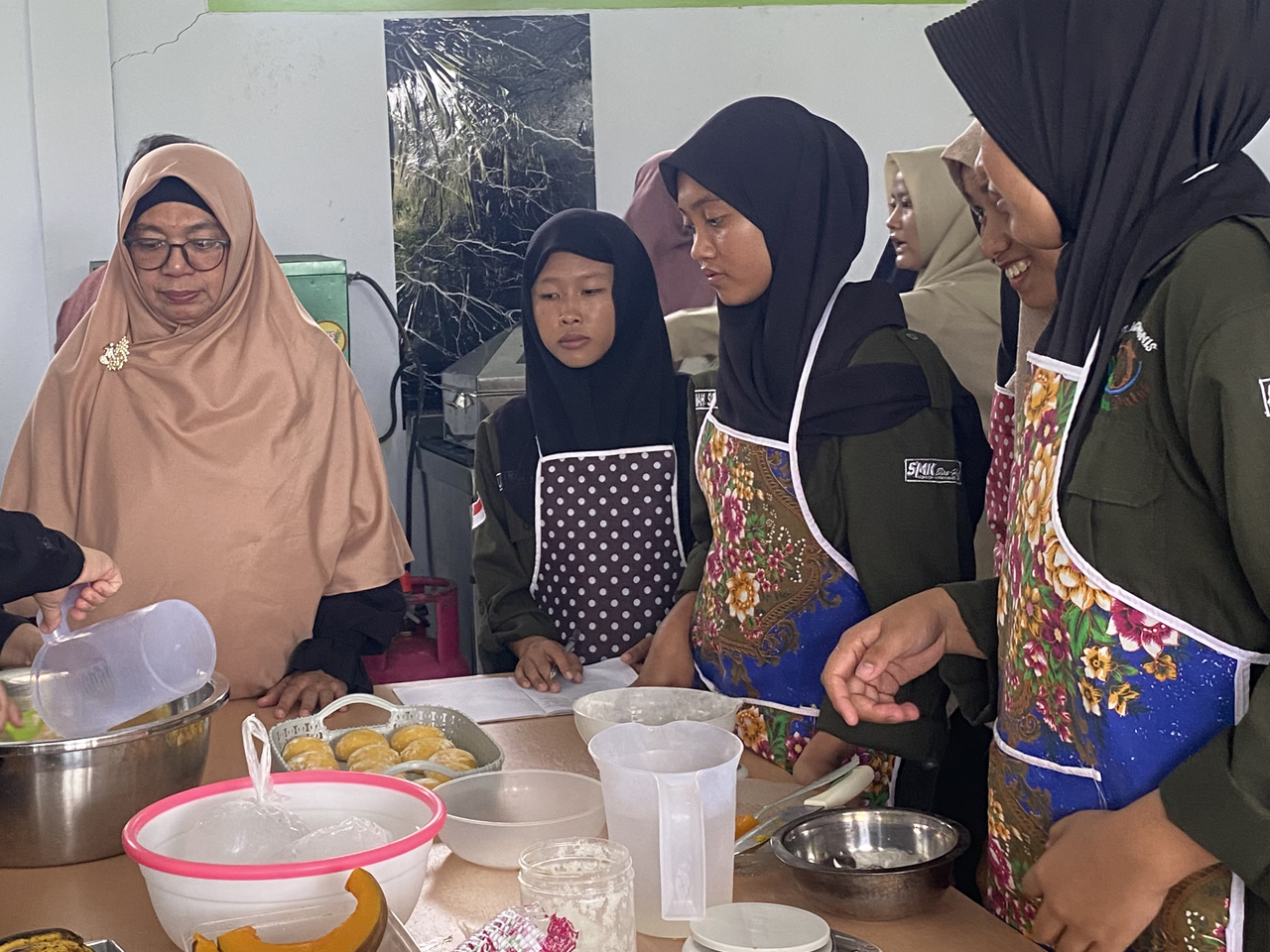
The participants of the activity were students of SMK Agribisnis Dangau Datuk Bengkulu who participated in the activity with full enthusiasm. The students not only received material on the benefits and nutritional value of yellow pumpkin and bananas, but were also introduced to the concept of food diversification as an effort to increase the use of local agricultural products to be more varied and have added value.
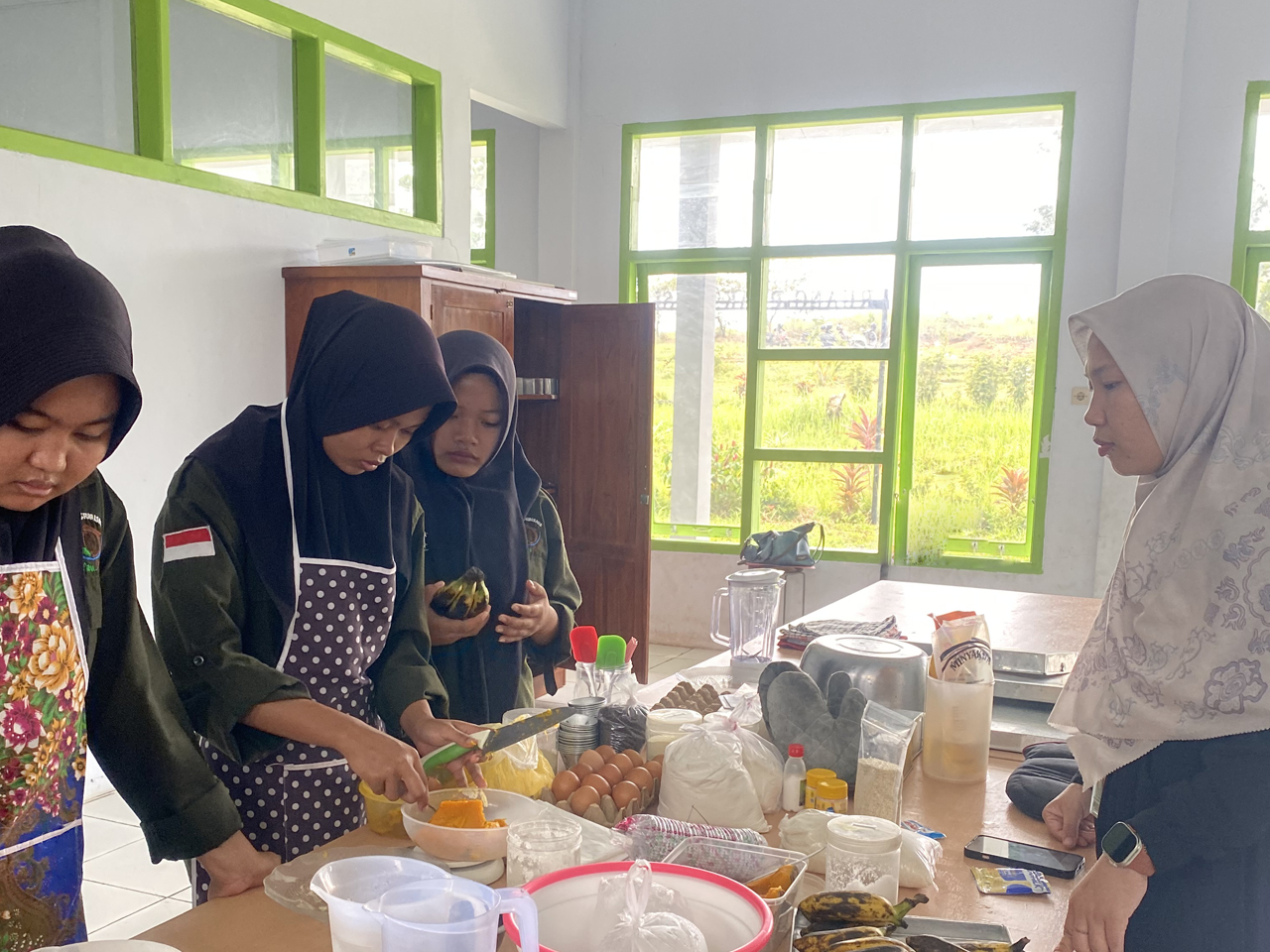
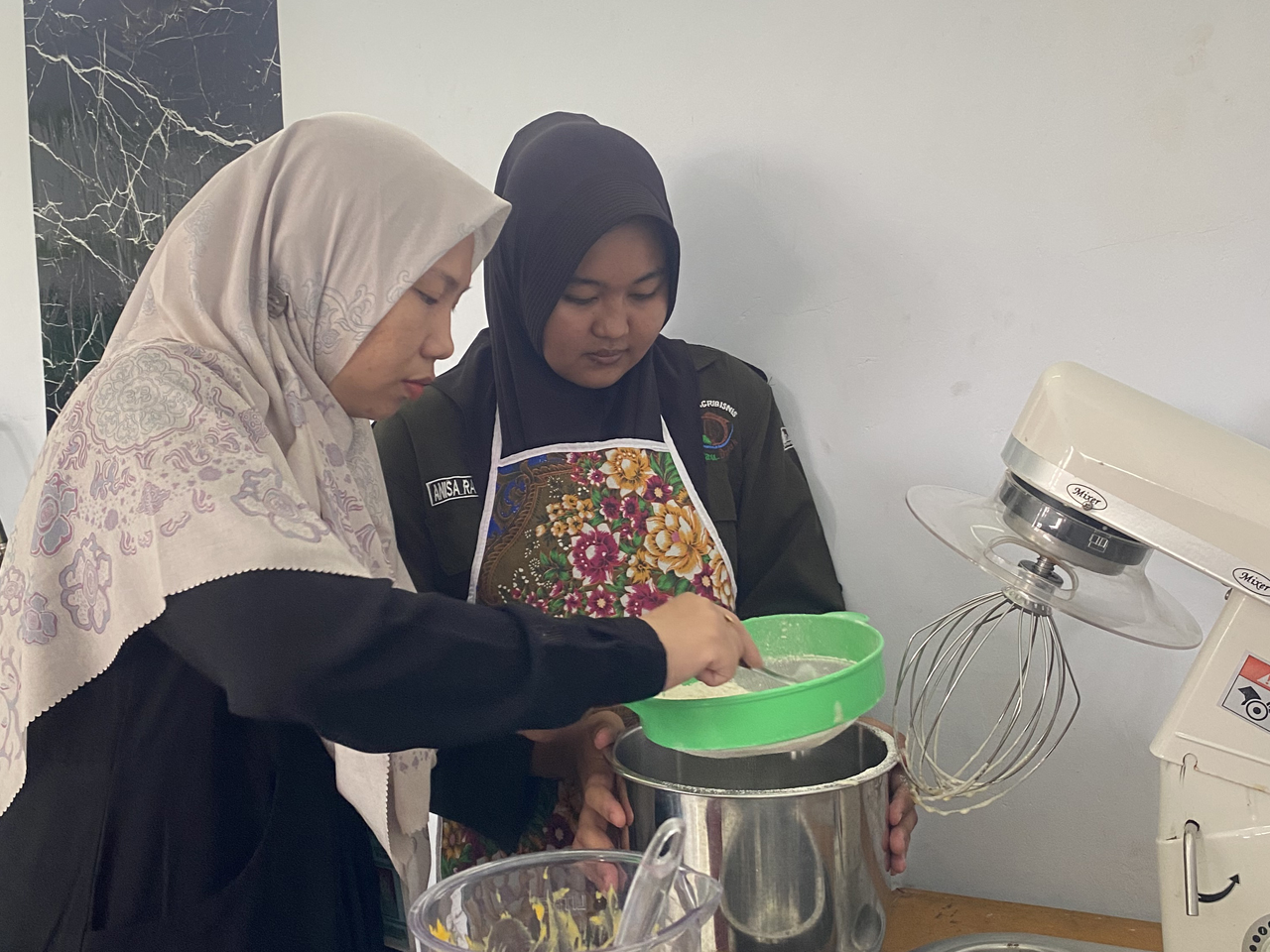
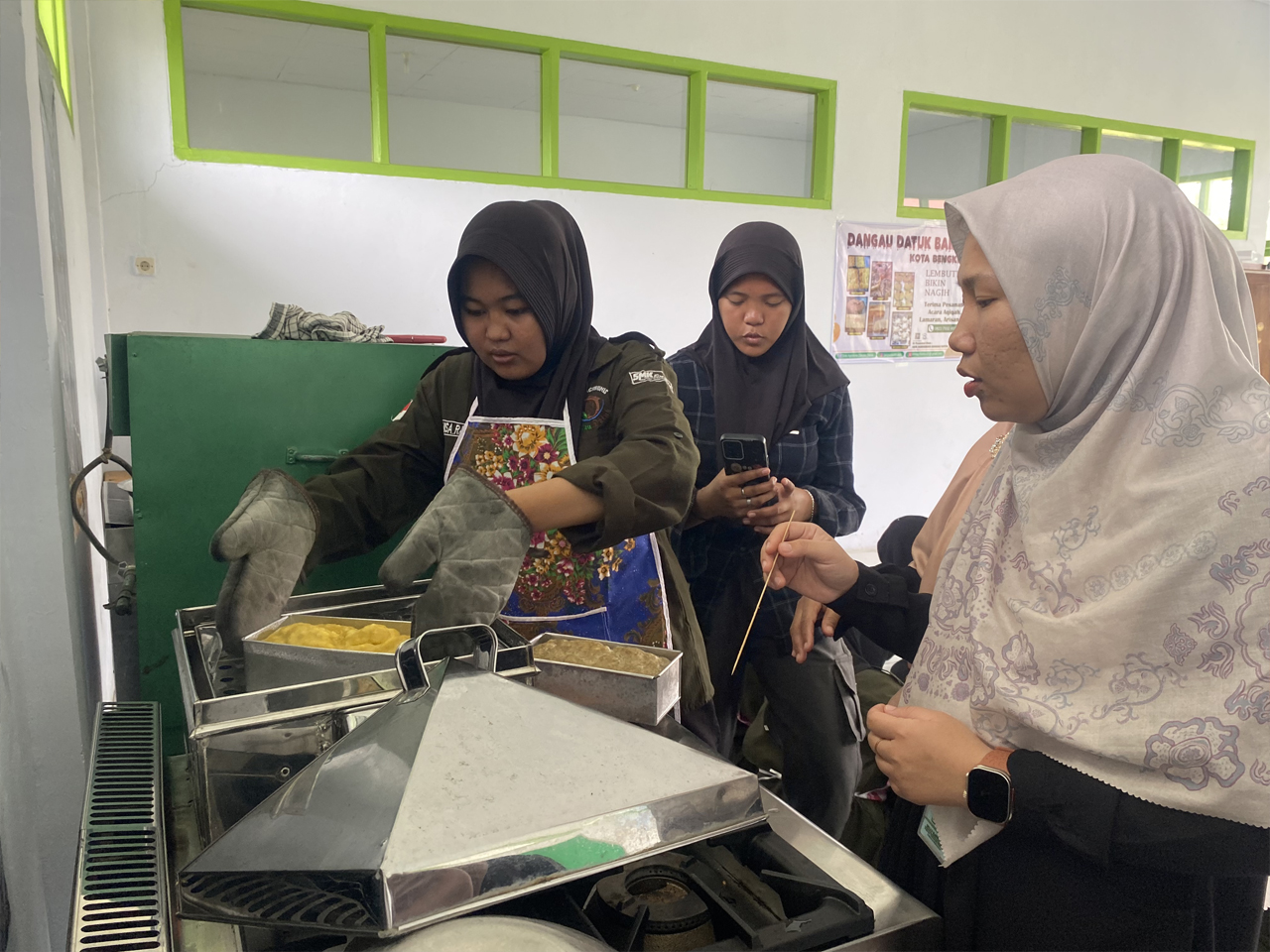
In addition to the delivery of the material, this activity was also equipped with a practice session on making steamed sponges made from yellow pumpkin and bananas. In the session, the students were invited to be directly involved in the manufacturing process starting from the processing of ingredients, mixing the dough, to the steaming process. This practice provides hands-on experience for students regarding food processing techniques that are simple but can produce products that are attractive, nutritious, and have the potential to be developed as a business.
Through this service activity, it is hoped that students can increase creativity in utilizing local food available around them. In addition, this activity is also expected to be able to foster entrepreneurial interest among students, so that they not only have technical skills in food processing, but also are able to see business opportunities from value-added local commodity-based food products.


