COMMUNITY EDUCATION ON BLUE CARBON CONCEPTS STRENGTHENS COASTAL CLIMATE RESILIENCE IN KAHYAPU VILLAGE, ENGGANO ISLAND
Kahyapu Village, Enggano Island – Climate change has become one of the most pressing global challenges, affecting marine environmental sustainability, coastal economic development, and coastal community livelihoods. In response to this issue, a community service program entitled “Blue Carbon Literacy Education as an Effort to Mitigate Coastal Areas and Sustain Marine Biota in Kahyapu Village, Enggano Island” was conducted to enhance community awareness and understanding of the importance of blue carbon ecosystems and its importance for marine organisms.
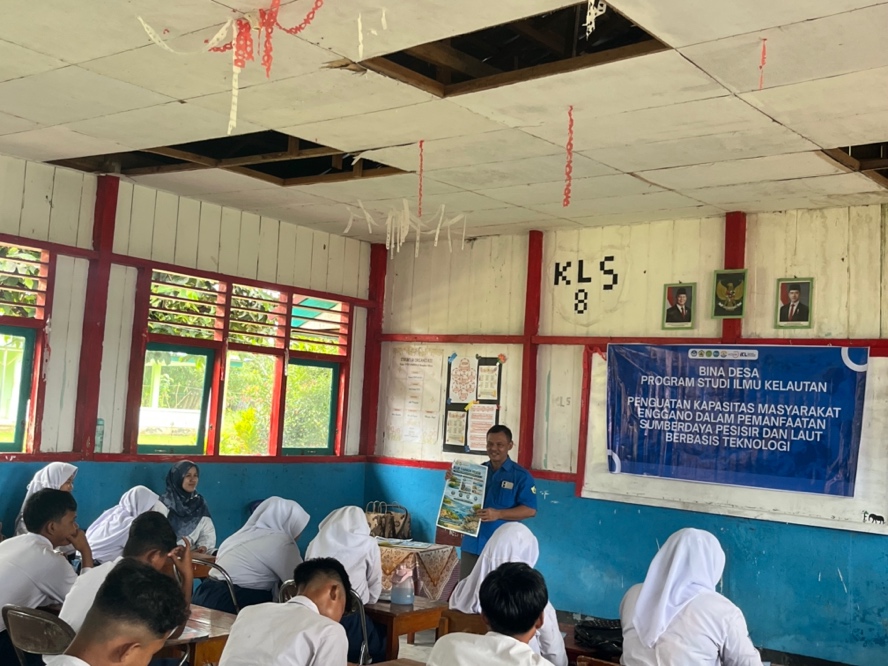
Blue carbon refers to the carbon captured and stored by vegetated coastal ecosystems such as mangrove forests, seagrass meadows, and tidal wetlands. These ecosystems play a significant role in climate change mitigation due to their exceptional carbon sequestration capacity in the long-term. Beyond their contribution to reducing atmospheric carbon dioxide, blue carbon ecosystems also support marine biodiversity by serving as nursery grounds, spawning habitats, and feeding areas for numerous marine organisms. Kahyapu Village, located on Enggano Island, possesses considerable blue carbon potential owing to its relatively pristine mangrove and seagrass ecosystems. These natural resources not only contribute to climate change mitigation but also support fisheries productivity and enhance the resilience of coastal communities. However, limited public knowledge regarding the ecological functions and environmental benefits of blue carbon ecosystems remains a challenge for sustainable coastal resource management and conservation efforts. To address this issue, the community service program was designed to improve the knowledge, understanding, and environmental awareness of local communities regarding blue carbon concepts, the blue carbon potential of Enggano Island, and their role in climate change mitigation and marine ecosystem sustainability.
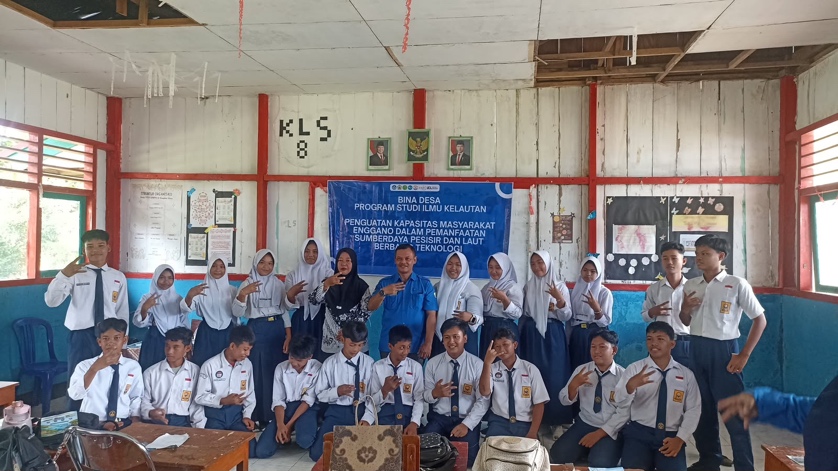
The program was implemented through educational outreach activities that actively encouraged local participation. The educational materials covered fundamental concepts of blue carbon, understanding blue carbon potential in Enggano Island through blue carbon map, and strengthening community capacity to adapt to climate change. A primary target of the program was students of SMPN 18 Enggano Island, who were introduced to the scientific and ecological importance of blue carbon ecosystems. Through interactive learning activities, students gained valuable insights into the relationship between healthy coastal ecosystems, climate change mitigation, and the sustainability of marine life. The program is expected to inspire students to become agents of change within their communities by promoting environmental stewardship and advocating for the protection of coastal and marine ecosystems. By fostering blue carbon literacy among younger generations, the initiative contributes to the development of climate-resilient communities capable of safeguarding the ecological and economic benefits provided by Enggano Island’s coastal resources. Through collaborative efforts involving educators, community members, and local stakeholders, this initiative represents an important step toward strengthening environmental awareness and supporting sustainable coastal development in Kahyapu Village and the broader Enggano Island region.


