Advancing SDG 14 Through Community Engagement: Fisheries Science Lecturers Raise Coral Reef Conservation Awareness in Enggano Island
The Fisheries Science Study Program, Faculty of Agriculture, University of Bengkulu, successfully conducted a community engagement program entitled “Socialization of Coral Reef Ecosystem Degradation in the Waters of Enggano Island, Bengkulu Province” in Kaana Village, Enggano District, North Bengkulu Regency. This activity was implemented under the Independent Community Service Scheme for the 2025/2026 academic year and contributes to the achievement of Sustainable Development Goal (SDG) 14: Life Below Water.
The community engagement team consisted of three lecturers from the Fisheries Science Study Program: Nurlaila Ervina Herliany, S.Pi., M.Si. as the project leader, accompanied by Nur Lina Maratana Nabiu, S.Pi., M.Si. and Ari Anggoro, S.Pi., M.Si. as team members. The program also involved undergraduate students, namely Falisha Pati Safwana, Muhammad Reifan Maulana, and Al Hafiz Azelio, as part of experiential learning and community-based academic activities.
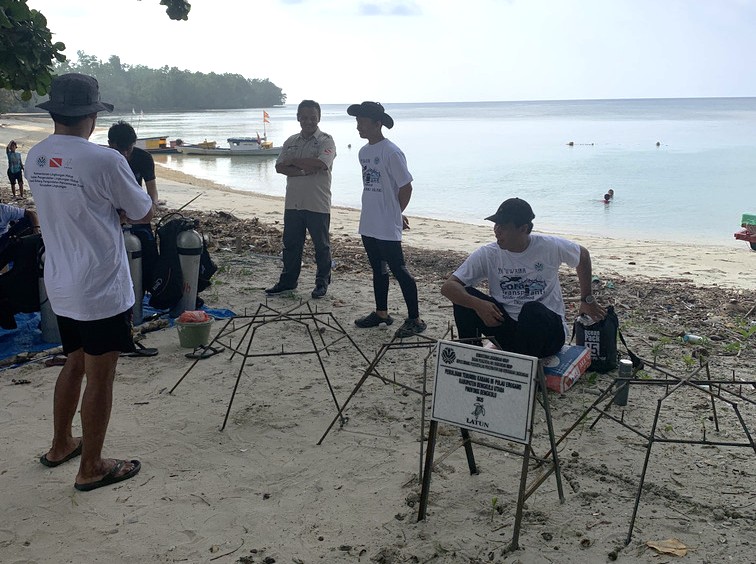
Enggano Island, one of Indonesia’s outermost islands located in the Indian Ocean, possesses substantial coastal and marine resources supported by interconnected mangrove, seagrass, and coral reef ecosystems. These ecosystems play a critical role in maintaining marine biodiversity, supporting fisheries productivity, and protecting coastal areas from wave action and erosion. However, increasing anthropogenic pressures have contributed to the degradation of coral reef ecosystems in several areas of Enggano Island, including the waters of Kaana Village. Previous studies have reported that live coral cover in this area falls within the poor category, indicating the need for immediate conservation and awareness-building efforts.
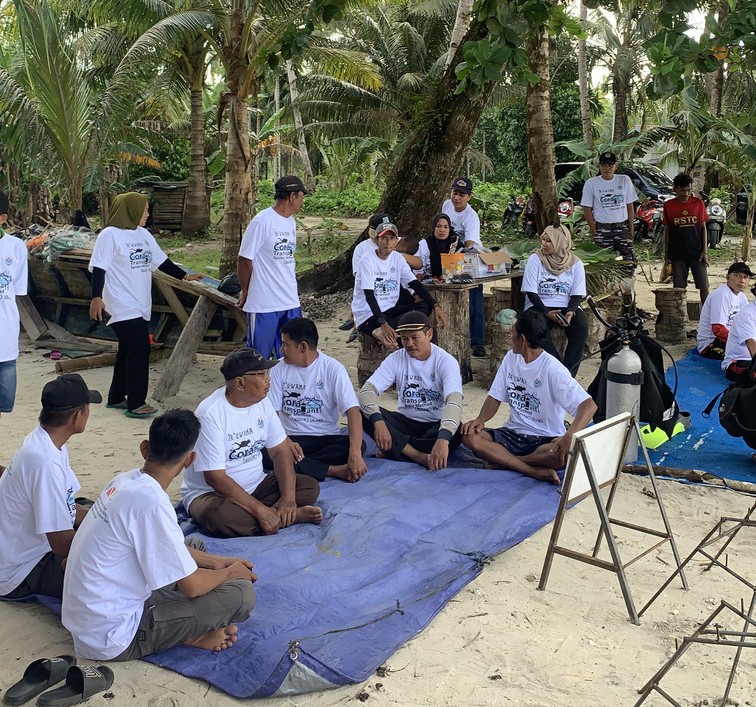
The outreach activity was held on 6 April 2026 at the Kaana Village Hall and was attended by approximately 20 participants representing the village government, local fishers, and community leaders. The program employed a combination of lectures and interactive discussions to facilitate knowledge transfer and community participation. The materials presented focused on the ecological and socio-economic functions of coral reef ecosystems, the major drivers of coral reef degradation, and the environmental and economic consequences resulting from ecosystem decline.
Throughout the discussion sessions, participants demonstrated strong engagement with the topic and expressed concern regarding the current condition of coral reefs in their local waters. The activity also served as a platform to disseminate scientific information regarding coral reef status in Kaana Village and to encourage community involvement in conservation initiatives. Particular emphasis was placed on the importance of sustainable fisheries practices and responsible utilization of coastal resources to ensure long-term ecosystem resilience.
Evaluation conducted before and after the activity indicated a significant increase in participants’ understanding of coral reef functions, degradation factors, and conservation measures. The results suggest that community-based educational initiatives can effectively enhance environmental awareness and support local participation in marine conservation efforts.
This program reflects the commitment of the Fisheries Science Study Program, University of Bengkulu, to integrating education, research, and community service in addressing coastal and marine environmental challenges. It is expected that this initiative will serve as an initial step toward strengthening community awareness and fostering collaborative efforts for the sustainable management and conservation of coral reef ecosystems in Enggano Island.


