Practitioners Lecture for Organic Agriculture Course Highlights the Role of Organic Fertilizers and HRRD Community Initiatives
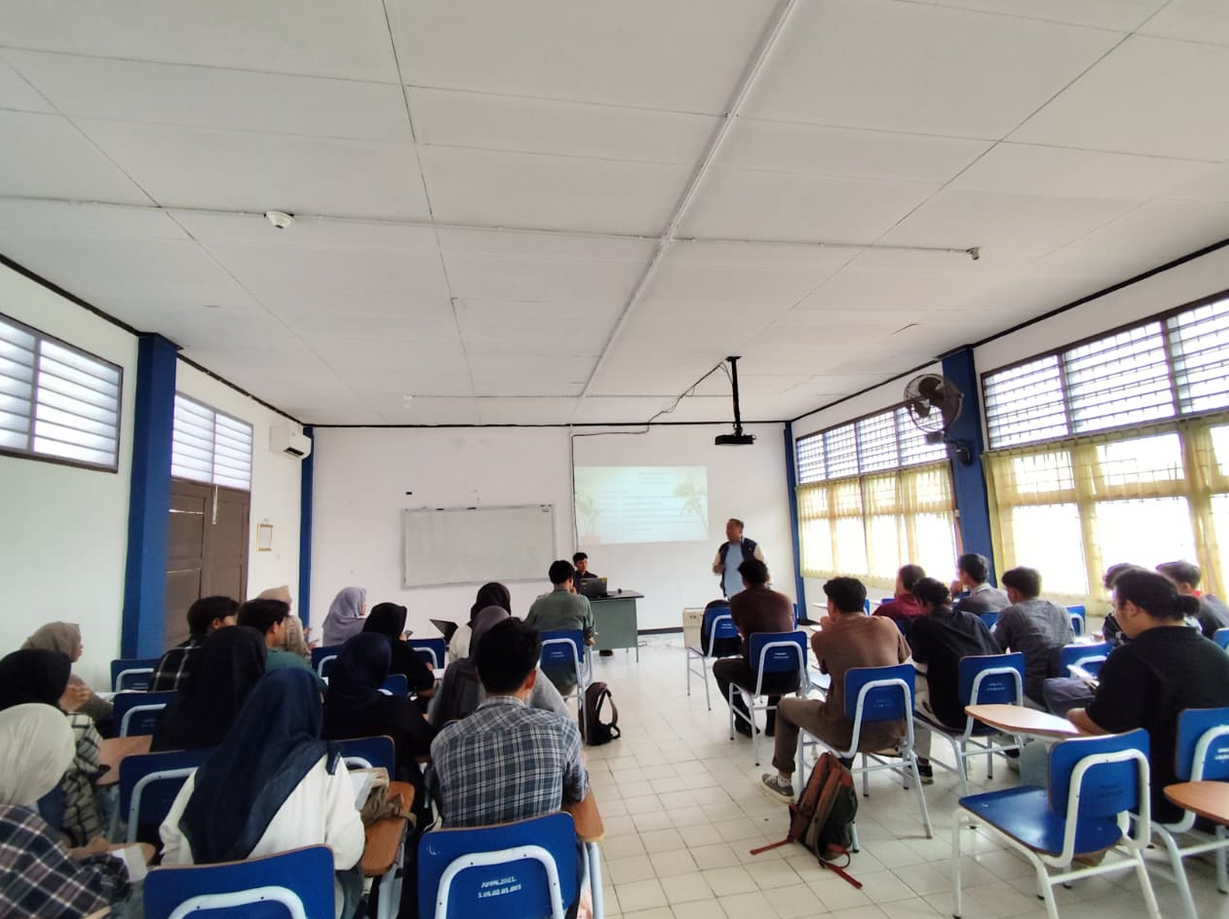
Bengkulu, 25 November 2025 — The Organic Agriculture course under the Agroecotechnology Study Program, Faculty of Agriculture, University of Bengkulu (UNIB), successfully held a Practitioners Lecture featuring Revo TS Guntoro, an agricultural practitioner actively working in the field of organic farming.
During this session, Mr. Revo delivered material on the importance of organic fertilizers in agricultural systems and provided insights into the processes involved in producing high-quality organic fertilizers. His explanations emphasized how organic amendments contribute to soil health, crop productivity, and long-term agricultural sustainability.
Introducing HRRD: Humus Rejang Rekayasa D’Compos
In addition to discussing organic agriculture, Mr. Revo introduced one of his ongoing initiatives, HRRD (Humus Rejang Rekayasa D’Compos)—a community movement focused on environmental sustainability. This community is dedicated to developing organic agriculture, primarily through organic compost production.
HRRD utilizes a wide range of organic materials, including livestock manure, cocopeat, coffee husks, rice bran, and discarded vegetables—often obtained when market prices drop significantly. These materials are processed using beneficial microorganisms to create organic fertilizers that are both high quality and environmentally friendly.
Mr. Revo also explained several key activities conducted within the HRRD community, such as:
-
Production of solid compost
-
Production of liquid organic fertilizer (LOF)
-
Opportunities for student internships and research collaborations in the field of organic agriculture
This openness positions HRRD as a real-world learning hub for Agroecotechnology students who want to gain practical experience in sustainable agriculture.
Highly Interactive and Enthusiastic Student Participation
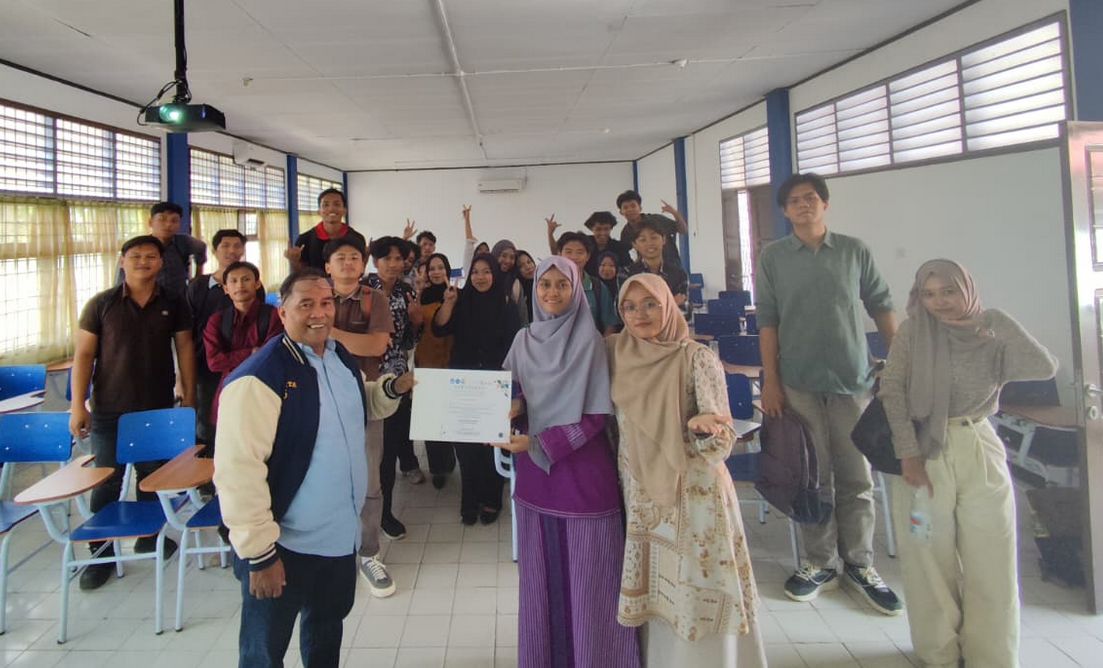
The lecture proceeded in a lively and engaging atmosphere. Although the class consisted of approximately 34 students, almost every participant actively joined the discussion. The question-and-answer session grew increasingly dynamic as students explored deeper topics related to organic fertilizer production, environmental sustainability, and potential research applications.
The session closed with positive feedback from students, who expressed that the practitioner lecture broadened their understanding of organic farming and inspired them to explore opportunities in sustainable agriculture.
Strengthening Practical Competence in Organic Agriculture
The Practitioner Lecture series continues to be an important component of the Agroecotechnology curriculum, bridging theory and practice while enriching students’ knowledge of sustainable agricultural innovations. This activity strengthens the commitment of the Study Program to produce graduates who are competent, environmentally aware, and ready to contribute to the development of resilient agricultural systems.