UNIB Holds Organic Horticulture Training for Farmers in Air Duku Village
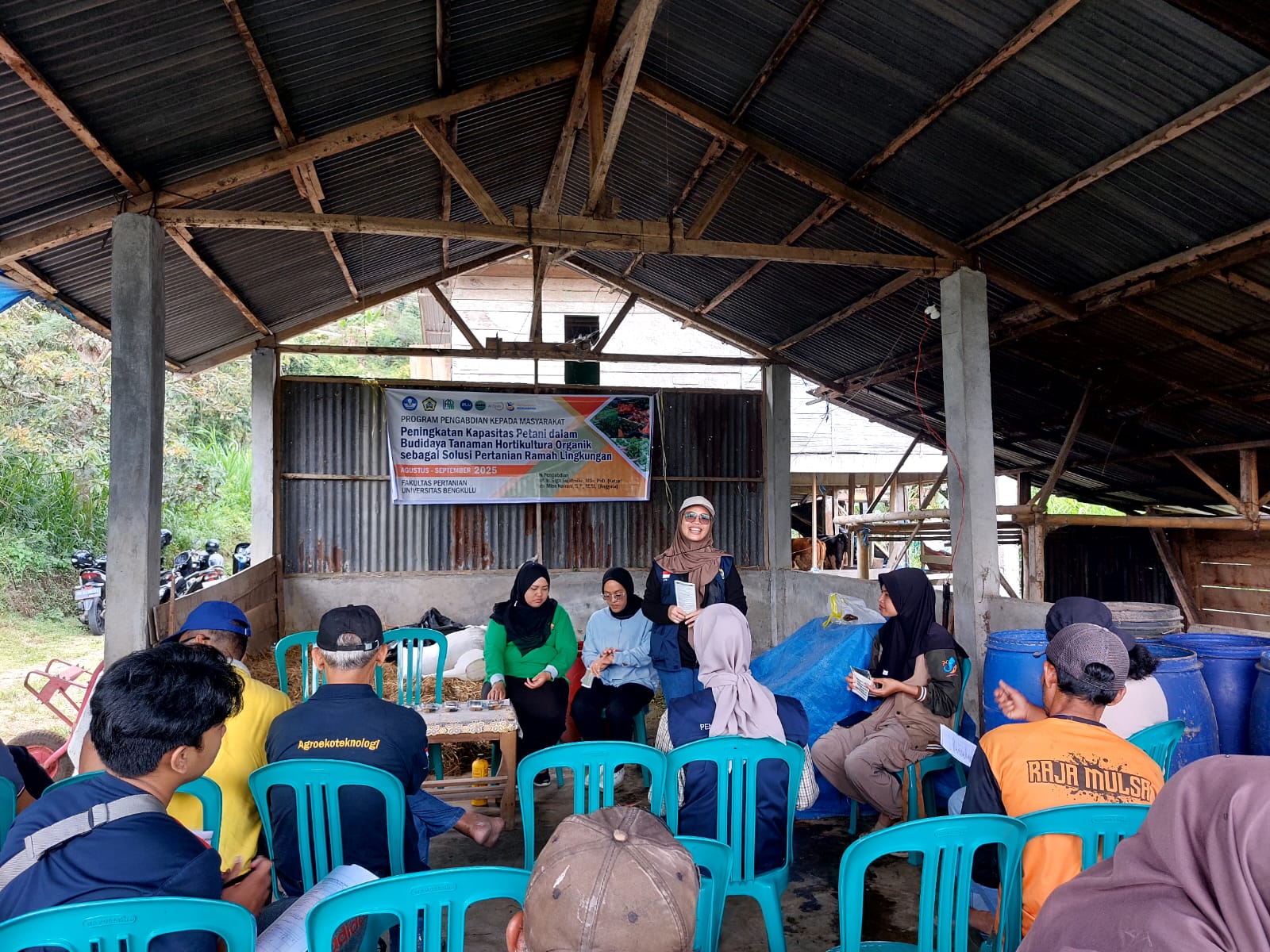
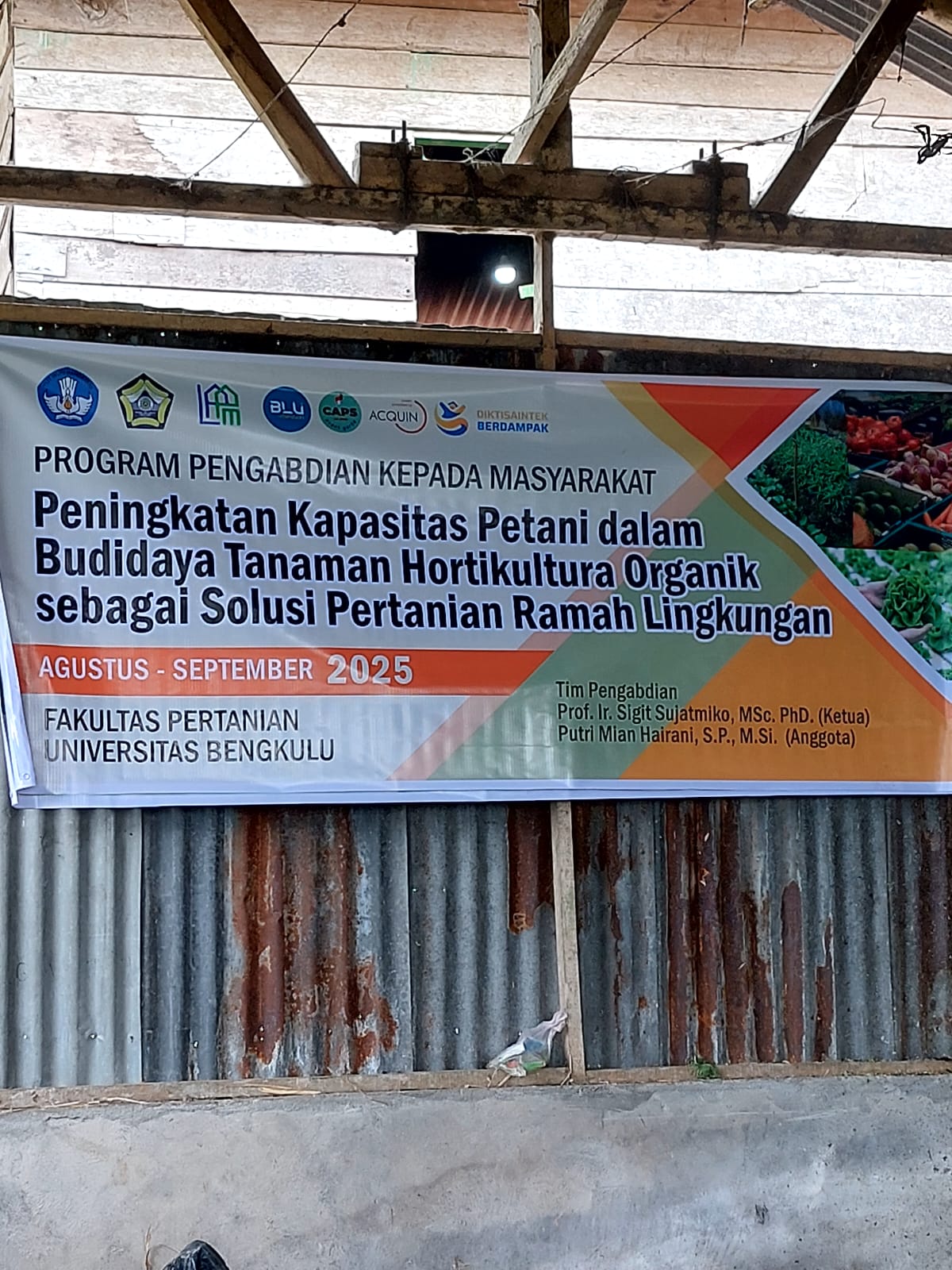
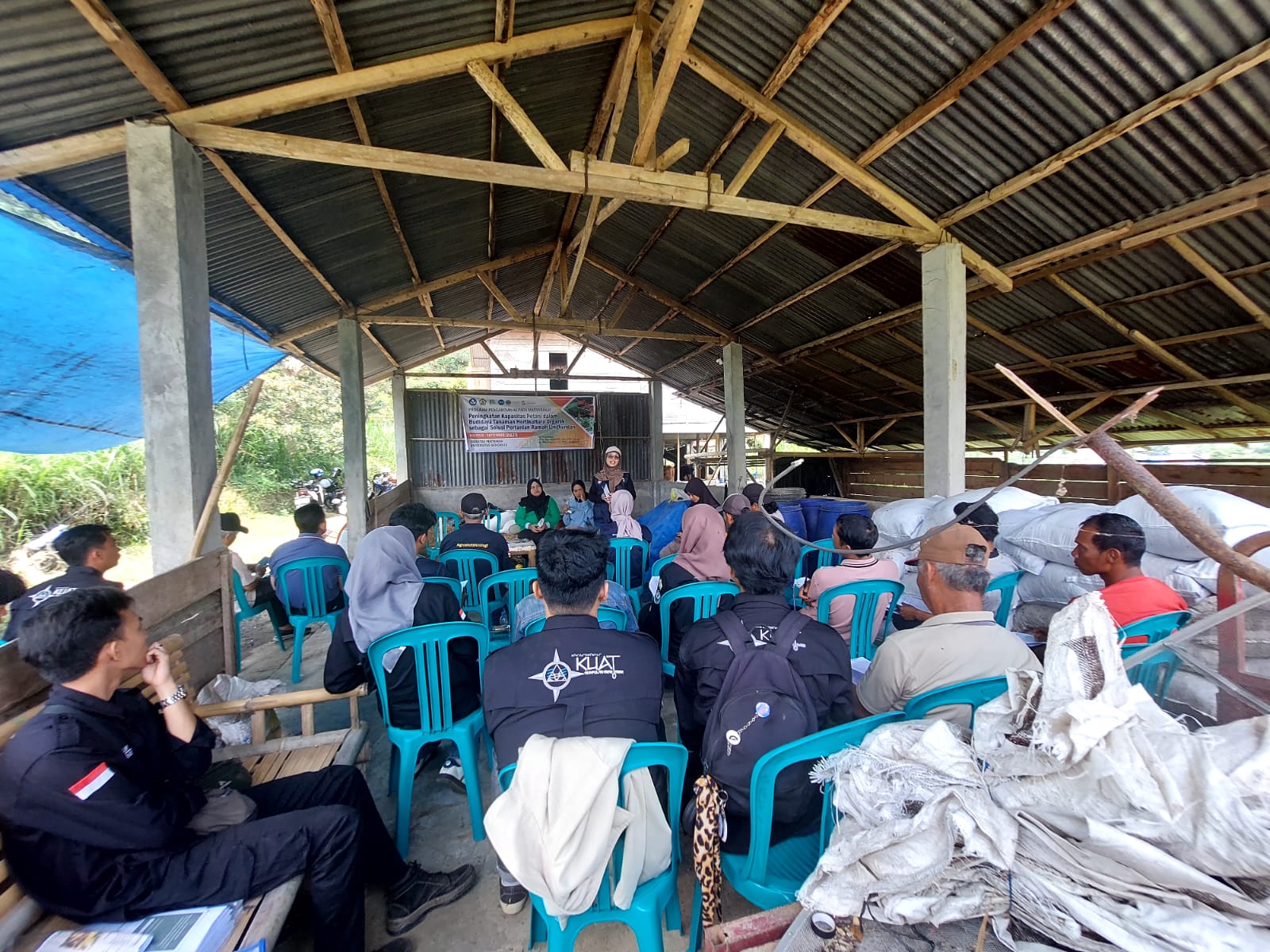
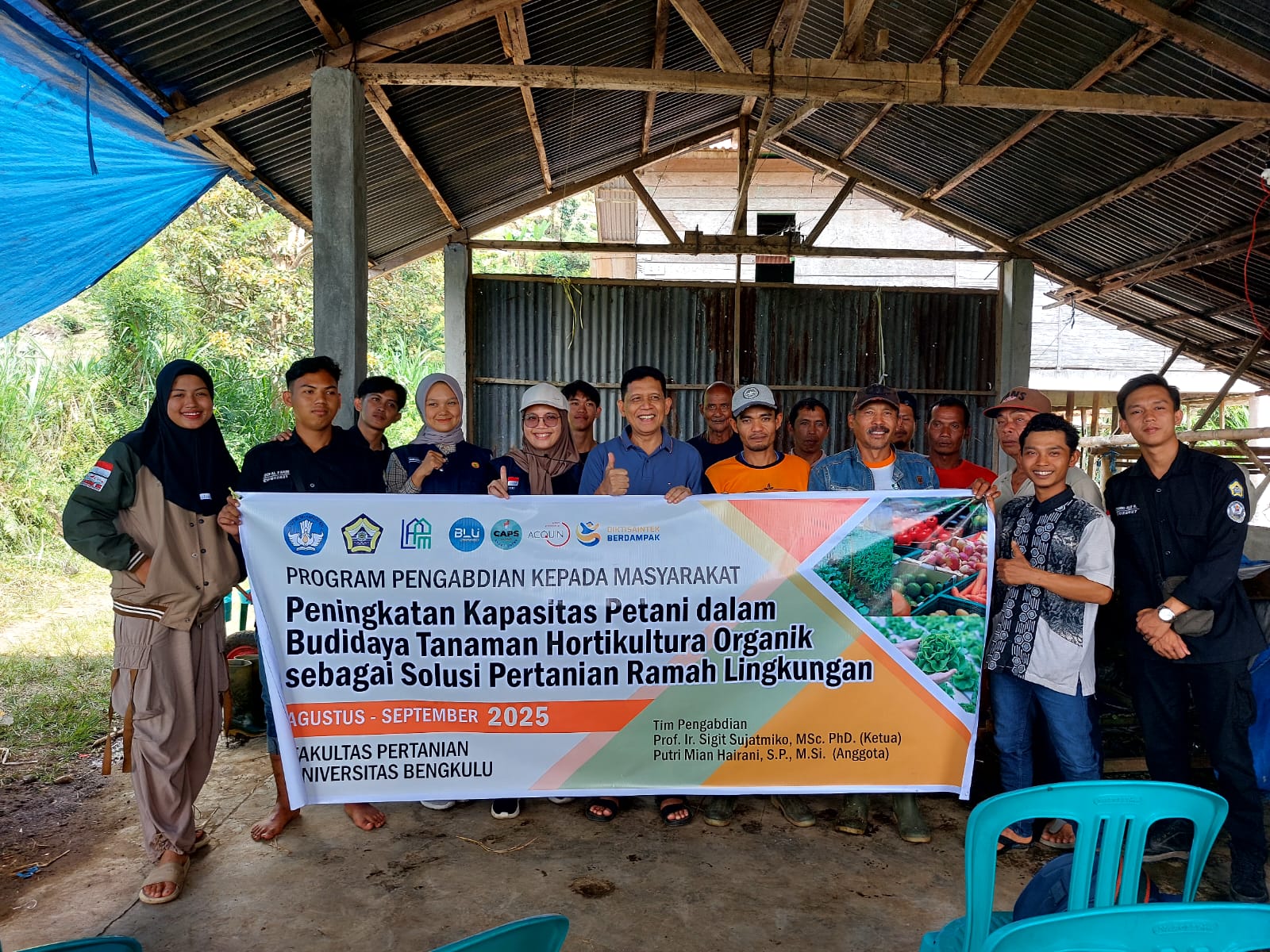
Air Duku Village, Selupu Rejang, Rejang Lebong — The Faculty of Agriculture, University of Bengkulu (UNIB) conducted an organic horticulture training session as part of its Community Service (Pengabdian kepada Masyarakat) program on Saturday, 9 August 2025, in Air Duku Village, Selupu Rejang District, Rejang Lebong Regency.
This program was designed to strengthen farmer capacity building in highland vegetable production while promoting environmentally friendly agriculture. Many horticulture farmers in highland areas rely heavily on chemical fertilizers and synthetic pesticides to maintain yields. While effective in the short term, this approach can increase production costs, reduce soil health, and complicate pest management over time. Air Duku’s strong horticulture base—combined with local cattle farming—creates a promising opportunity to adopt organic practices by converting livestock waste into valuable organic inputs.
Collaboration with Sari Rukun Farmer Group
The training was implemented in partnership with the Sari Rukun Farmer Group (Kelompok Tani “Sari Rukun”), involving approximately 30 farmers and small-scale cattle keepers. The UNIB team was led by Putri Mian Hairani, S.P., M.Si., supported by Prof. Dr. Ir. Sigit Sudjatmiko, MSc, and assisted by students Taufik Mahendra (E1F022021), Even Satria Ramadhan (E1F022029), and Della Puspita (E1F022022).
Training Topics: Practical Organic Horticulture for Farmers
The session used an interactive format—visual presentations, guided discussions, Q&A, and short video demonstrations—to ensure the materials were accessible and directly relevant to farmers’ day-to-day challenges.
Key topics included:
-
Core principles of organic farming and why organic horticulture matters for soil health and food safety
-
Composting and organic fertilizer production using locally available materials, including cattle manure and crop residues
-
Botanical pesticides (plant-based pest control) and safer approaches to managing pests and diseases
-
Step-by-step organic horticulture practices, from land preparation and nursery management to planting, maintenance, and harvesting
-
Basic marketing strategies to add value to healthier produce and improve competitiveness
To support learning beyond the classroom, participants received a practical leaflet on organic horticulture, prepared as one of the program outputs and intended for Intellectual Property (IP/HKI) registration.
Outcomes and Follow-Up Commitment
At the end of the event, participants discussed realistic next steps for gradual adoption—such as setting up a designated area for collecting organic materials, initiating small-scale composting, and coordinating peer learning within the farmer group.
To strengthen sustainability and cross-sector support, the program also prepared an Implementation Agreement (IA) with the Selupu Rejang Subdistrict Office (Camat), aiming to facilitate follow-up coordination and continued collaboration for environmentally friendly agriculture in the area.
About the Program
This organic horticulture training is part of UNIB’s commitment to community engagement through applied education and farmer empowerment. By promoting composting, botanical pesticides, and improved cultivation practices, the program supports more sustainable production, lower dependence on external chemical inputs, and healthier highland farming systems.