University of Bengkulu Soil Science Team Educates Sambirejo Farmers on Turning Agricultural Waste into Eco Enzyme
REJANG LEBONG, BENGKULU — Lecturers and students from the Soil Science Study Program, Faculty of Agriculture, University of Bengkulu (UNIB), conducted a community service program entitled “Socialization and Education on Utilizing Agricultural Waste to Produce Eco Enzyme for Sustainable Environmental Management” in Sambirejo Village, Curup Tengah District, Rejang Lebong Regency, Bengkulu Province.
The program was led by Sendi Puspa Sari, S.P., M.Sc., with Prof. Ir. Priyono Prawito, M.Sc., Ph.D., and Prof. Dr. Ir. Rr. Yudhi Bertham, M.P., as team members. Students from the Soil Science Study Program also participated in the activity. The program represented the university’s commitment to applying scientific knowledge to support community empowerment and sustainable environmental management.
The initiative aimed to improve the knowledge and practical skills of local communities, particularly farmer groups, in managing organic agricultural waste and transforming it into useful products. Agricultural residues, such as vegetable scraps, fruit peels, and leaves, have the potential to be reused rather than discarded, providing an alternative approach to organic waste management.
Education and Hands-On Eco Enzyme Production
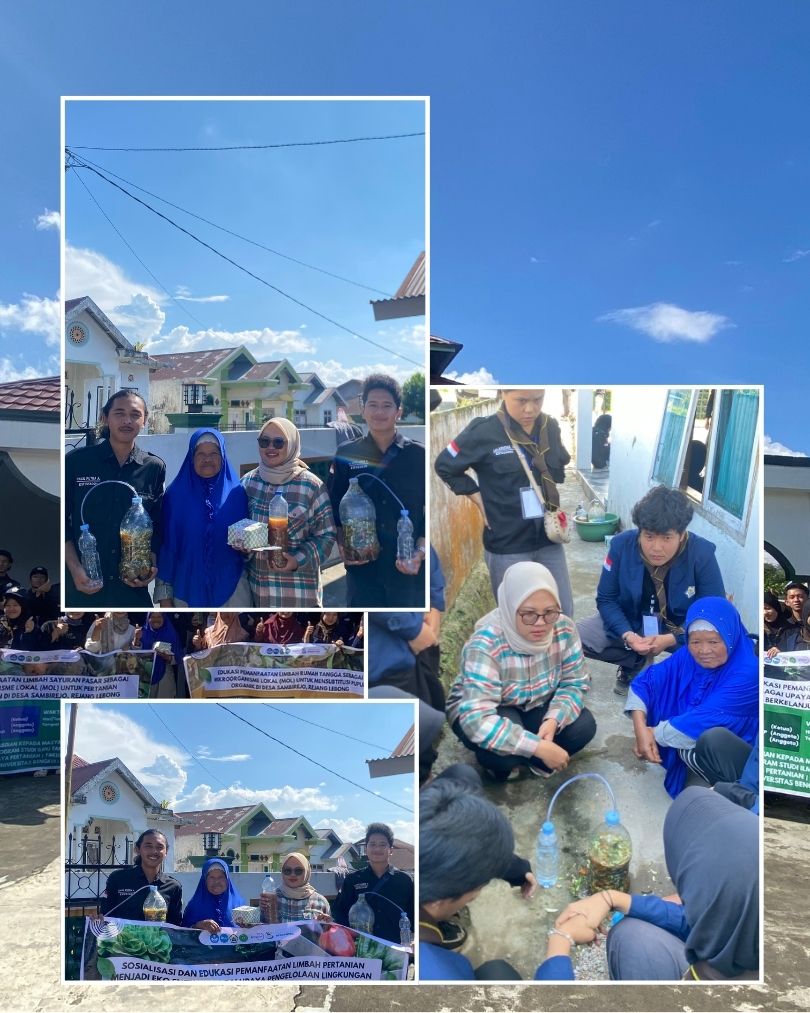
The program consisted of educational sessions, socialization, discussions, question-and-answer sessions, and hands-on eco enzyme production. Participants received information about the importance of environmentally friendly organic waste management, the materials required, and the stages involved in producing eco enzyme through fermentation.
The practical session was an important component of the program, giving participants an opportunity to learn about agricultural waste processing through direct application. Through this activity, community members were expected to better understand how to utilize organic materials available in their surroundings and apply the knowledge gained in their daily lives.
The program also provided a platform for knowledge exchange between the community service team and local residents regarding the importance of managing organic waste generated by agricultural activities. Discussions and question-and-answer sessions allowed participants to explore the production process and identify opportunities to make better use of locally available organic materials. This educational approach was expected to encourage more responsible agricultural waste management practices.
Providing Support for Farmer Groups
As part of its efforts to support the sustainability of the program, the community service team also handed over supporting equipment and materials to the farmer group. This assistance was intended to help community members continue practicing eco enzyme production after the program and encourage the independent management of organic waste.
The availability of organic materials from local agricultural activities, together with the active involvement of farmer groups, provides an important foundation for developing more environmentally friendly waste management practices. By utilizing locally available resources, the community is expected to be able to develop and maintain organic waste processing activities over time.
Eco enzyme is a liquid produced through the fermentation of organic materials and can be used for various purposes depending on its characteristics and intended application. Introducing this simple processing method is expected to broaden community knowledge about alternative uses for organic waste while supporting efforts to maintain a cleaner environment.
A Commitment to the Three Pillars of Higher Education
This community service program forms part of the university’s commitment to the Three Pillars of Higher Education, particularly community service through the application of scientific knowledge to address local challenges. Through collaboration among lecturers, students, and farmer groups, the Soil Science Study Program, Faculty of Agriculture, University of Bengkulu, seeks to strengthen the role of higher education in community empowerment through accessible scientific knowledge and practical technologies.
In the future, the conversion of agricultural waste into eco enzyme is expected to be further developed as part of efforts to raise environmental awareness and reduce the amount of organic waste left unused. The active involvement of farmer groups is expected to support the continuation of these practices and facilitate the sharing of knowledge with other community members.
Through this initiative, the community service team hopes to encourage residents of Sambirejo Village to become more aware of agricultural waste management and use local resources more responsibly. These efforts are expected to contribute to a cleaner environment, greater environmental awareness, and the promotion of sustainable agricultural practices in Rejang Lebong Regency.


