Eel Farming in Limited Spaces: UNIB Lecturers Promote Improved Nutrition and Self-Reliance among Beringin Raya Residents
Bengkulu City, 18 November 2025 – Efforts to improve family nutritional quality while simultaneously strengthening household economic empowerment continue to be intensified through a community service program conducted by lecturers of Universitas Bengkulu (UNIB) in Beringin Raya Subdistrict, Muara Bangkahulu District, Bengkulu City.
The program, entitled “Eel Farming in Limited Spaces as an Effort to Improve Family Nutritional Quality in Beringin Raya Subdistrict, Muara Bangkahulu District, Bengkulu City,” was implemented from 1 October to 15 November 2025 and involved residents of RT 04 RW 05, Beringin Raya.
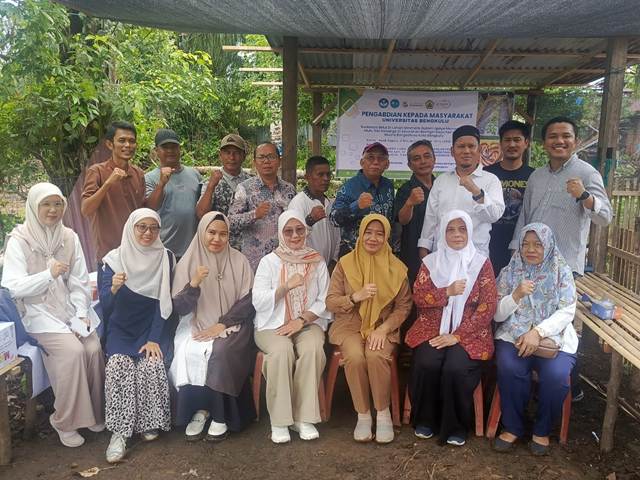
The head of the community service team, Ayub Sugara, S.Kel., M.Si, a lecturer from the Marine Science Study Program, Faculty of Agriculture, Universitas Bengkulu, explained that the program was motivated by the increasing demand for family nutrition, particularly animal protein, in line with growing public awareness of the importance of healthy and balanced diets. Nevertheless, limited economic capacity and access to nutritious food remain major obstacles for many households.
“Urban areas with narrow residential land also pose their own challenges. Through eel farming in limited spaces, we aim to provide a practical solution so that communities can still produce nutritious food sources from their own homes,” he stated.
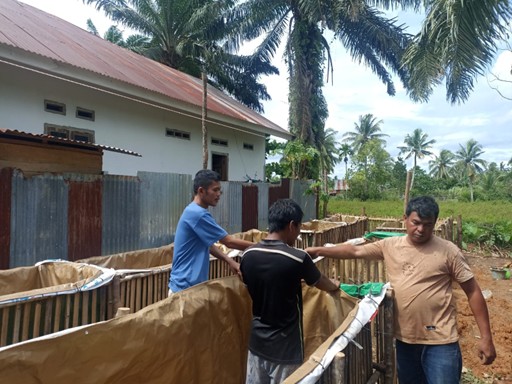
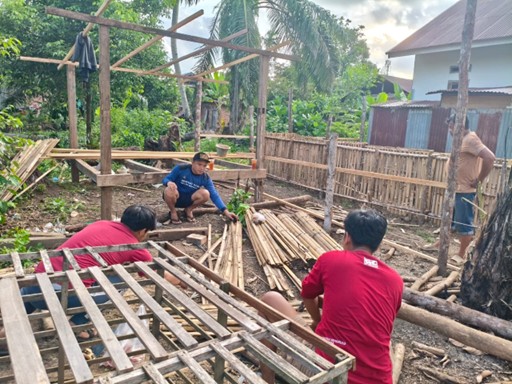
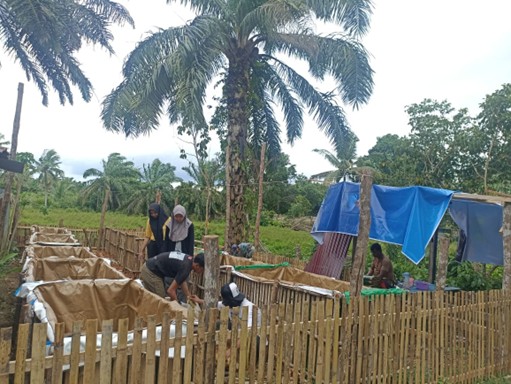
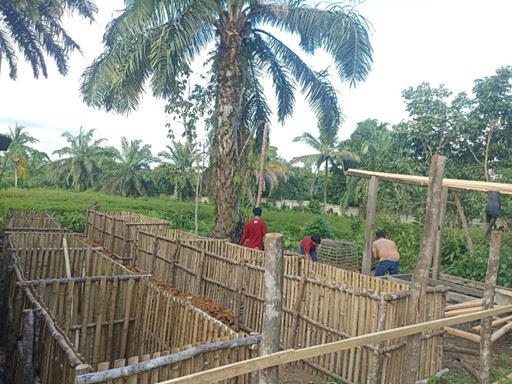
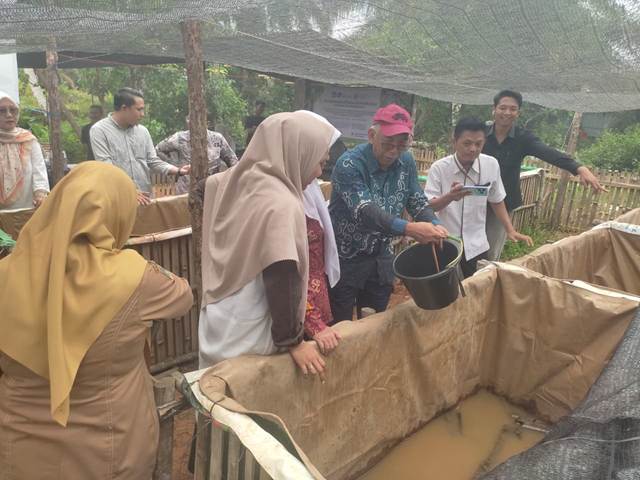
Eels (Monopterus albus) were selected as the main commodity due to their high protein content, ease of cultivation, and strong economic value with promising market prospects. Using simple cultivation systems with containers such as drums, buckets, or tarpaulin ponds, residents can transform their limited home yards into productive spaces.
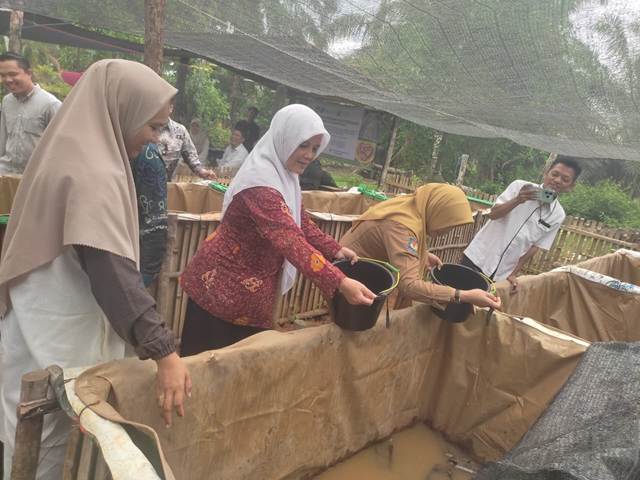
The community service team consists of Dr. Bustanuddin Lubis, SS., M.A., Julia Purnama Sari, ST., M.Kom., and Nella Tri Agustini, S.Kel., M.Si, and is supported by Universitas Bengkulu students participating in KKN Period 106 as part of field assistance.
Through the Institute for Research and Community Service (LPPM) of Universitas Bengkulu, the team also provided tangible support in the form of 10 tarpaulin eel ponds, eel shelters (hiding houses), and various supporting cultivation tools, which were handed over to the target community groups. This assistance is expected to serve as an initial stimulus enabling residents to immediately practice eel farming independently.
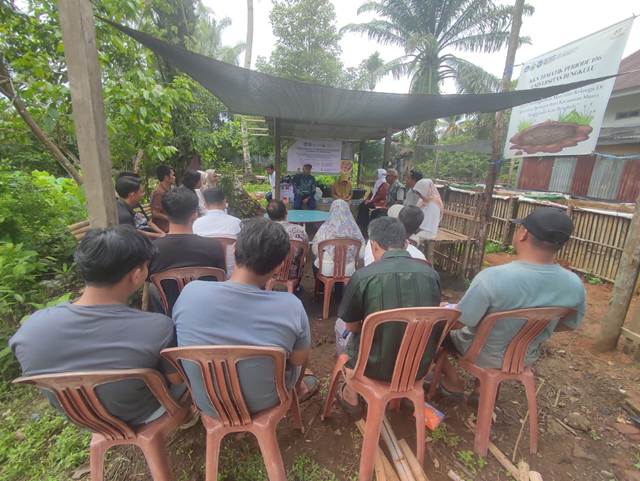
Throughout the program, participants received training on basic eel farming techniques, including media preparation, seed selection, feeding management, maintenance, and harvesting. In addition to technical aspects, the team also introduced concepts of small-scale home-based entrepreneurship and simple business management so that cultivation results can generate added economic value.
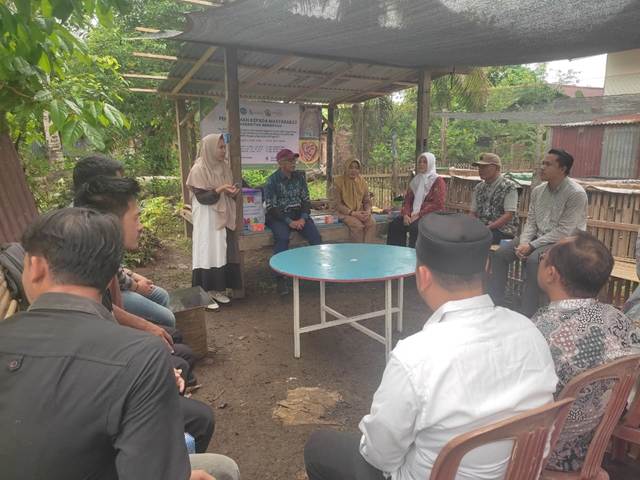
The program received a warm welcome from various stakeholders, including the Head of Beringin Raya Subdistrict, the Community Empowerment Institution (LPM), RW and RT leaders, youth organizations, and local residents. This strong support has become a significant motivation for both the community service team and participants.
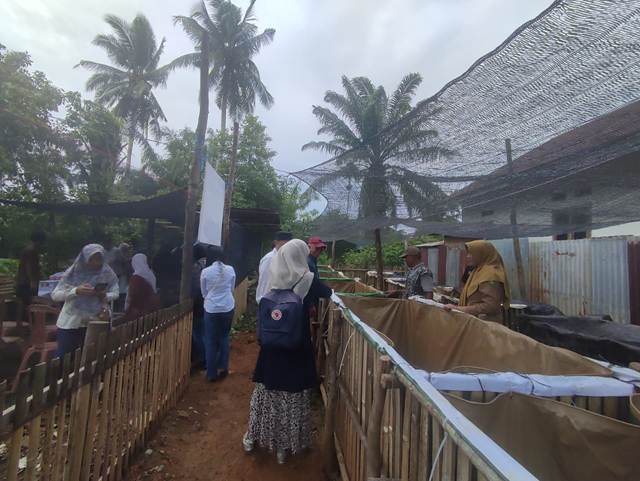
“We greatly appreciate this program because it provides direct benefits for residents, both in meeting nutritional needs and in creating opportunities to increase household income,” said a representative of the subdistrict. Through this initiative, it is hoped that communities will become more self-reliant in fulfilling family food needs while also being able to develop sustainable home-based small enterprises. The eel farming in limited spaces program represents a concrete contribution of higher education institutions in supporting food security and community welfare


